
Shopping Cart
There are no more items in your cart




























- Elanus Parts
- News
- 0 likes
- 0 comments
- identify derailleur hanger
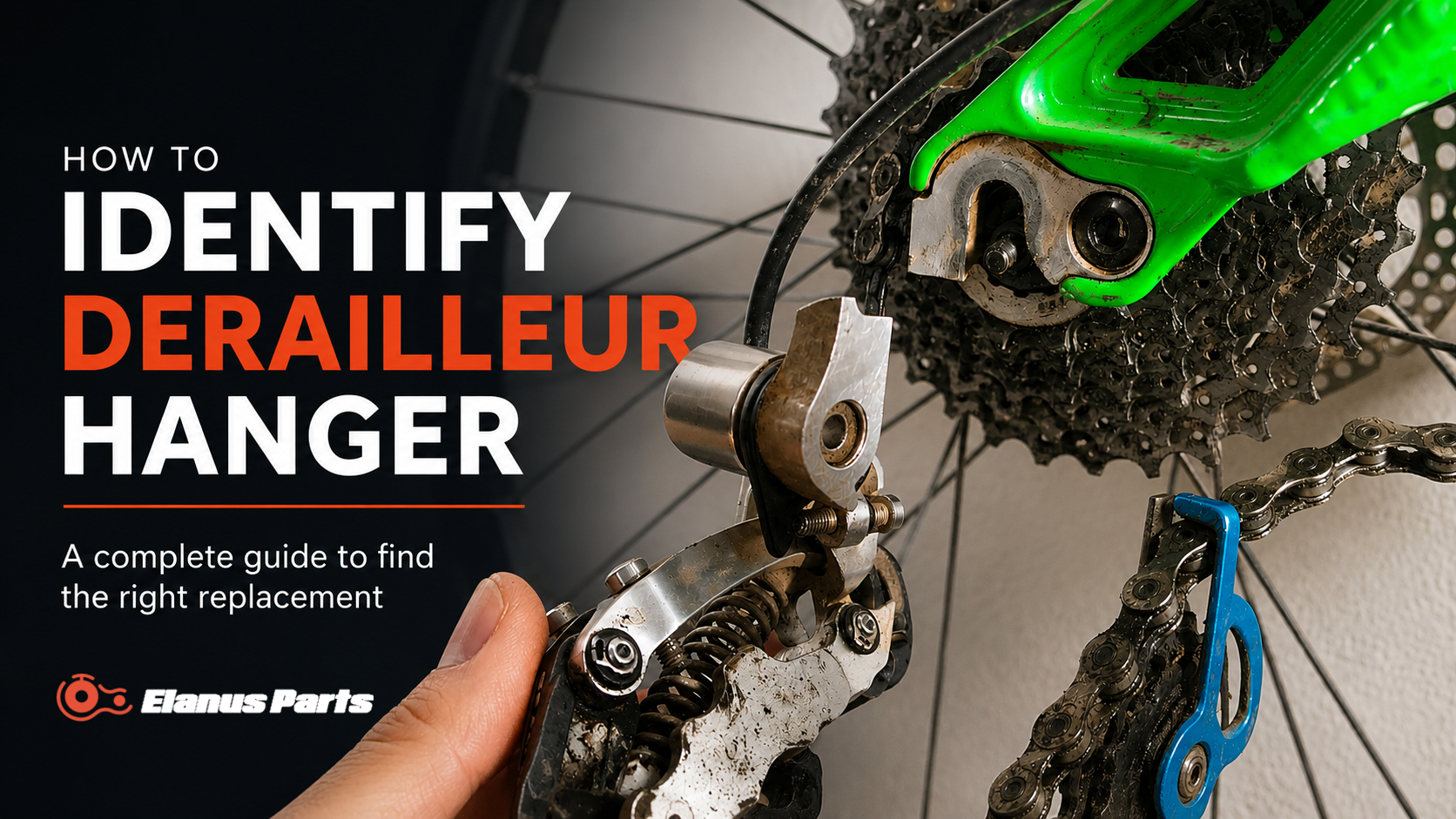 How to Identify a Derailleur Hanger
If your rear derailleur was damaged, your bike fell over, or you simply need a replacement derailleur hanger, the first challenge is identifying the correct one.
Unfortunately, derailleur hangers are not universal. There are thousands of different designs, and even bikes from the same manufacturer may use different hangers depending on the model year, frame version, axle type, or groupset.
The good news? With a few simple checks, you can usually identify the correct hanger quickly and avoid ordering the wrong part.
At Elanus Parts we have helped cyclists identify thousands of derailleur hangers and maintain one of Europe's largest derailleur hanger compatibility databases, covering more than 2,000 hanger designs.
What Is a Derailleur Hanger?
A derailleur hanger is a small replaceable metal part that connects the rear derailleur to the bike frame.
It is intentionally designed to be weaker than the frame. If the bike falls or the derailleur takes an impact, the hanger bends or breaks first, helping protect your frame from damage. More...
Common signs of a damaged hanger:
- Gears no longer shift correctly.
- The derailleur appears tilted toward the wheel.
- Chain skips unexpectedly.
- Hanger is visibly bent or cracked.
- Rear derailleur has broken off the frame.
Method 1: Identify by Bike Brand and Model
The easiest way is to know:
- Bike manufacturer
- Model name
- Model year
For example:
- Trek Fuel EX 2022
- Specialized Stumpjumper 2021
- Giant Talon 2020
- Canyon Spectral 2023
Many modern bike manufacturers change hanger designs over time, so the model year is often important.
Where to find the model information?
- Original purchase documents
- Frame decals
- Manufacturer website
- Bike serial number lookup, if available
If you know the exact bike model, identification becomes much easier.
Method 2: Compare the Original Hanger
If the original hanger is still available, remove it from the frame and inspect it.
Look at:
- Overall shape
- Bolt locations
- Axle hole design
- Thickness
- Alignment tabs
- Threaded mounting points
Important: Many hangers look almost identical at first glance. A difference of just a few millimeters can make a hanger incompatible. Because of this, comparing only one side of the hanger is often not enough.
Method 3: Take Clear Photos
Photos are usually the fastest and most reliable identification method.
Best photos to provide:
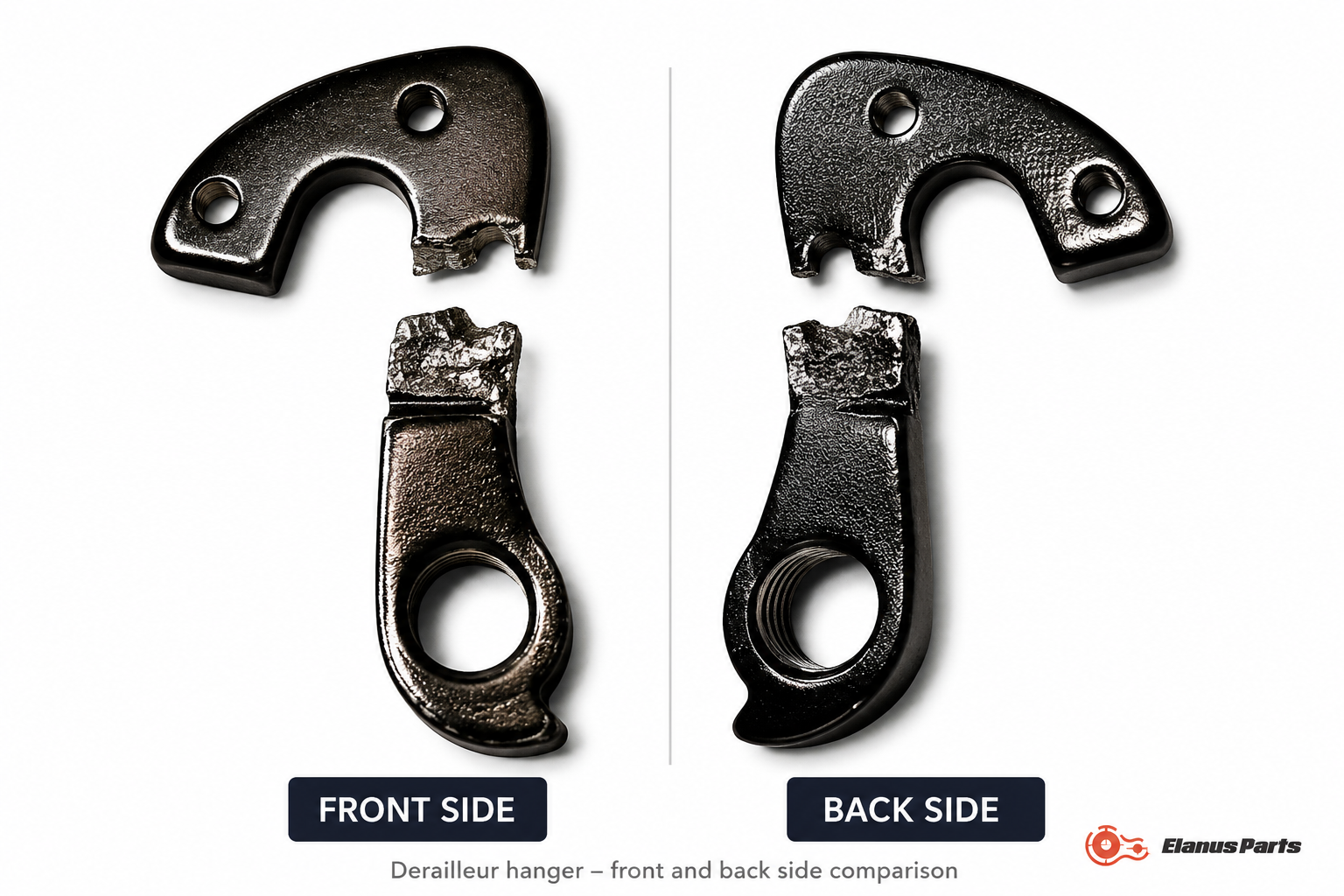
1. Both sides of the hanger
Place the hanger on a flat surface and photograph:
- Front side
- Back side
2. Frame dropout area
Take photos showing where the hanger attaches to the frame.
3. Entire bike, optional
A full bike photo can sometimes help confirm the model.
Avoid:
- Blurry images
- Photos with the derailleur still attached
- Pictures taken from only one angle
- Dark or low-resolution images
Method 4: Check the Part Number
Some hangers have part numbers stamped or engraved on them.
Examples:
- GH-123
- DROPOUT-456
- Pilo D789
If a part number is visible, identification becomes much easier.
However, not all hangers include markings, and some numbers may refer only to manufacturer production batches.
Method 5: Check the Rear Axle Type
Modern bikes commonly use:
Quick Release (QR)
- Traditional skewer
- Usually 5 mm rod with lever
Thru Axle
Common sizes include:
- 12 × 142 mm
- 12 × 148 mm Boost
- 12 × 157 mm Super Boost
Some hangers are specific to the axle type, so this information can be critical.
Why Identifying by Eye Is Difficult
Many cyclists are surprised to learn that there are more than 2,000 derailleur hanger designs currently in use.
Even bikes from the same manufacturer may use:
- Different hangers for carbon and aluminum frames
- Different hangers for various frame generations
- Different hangers depending on rear axle standards
Because of this, searching only by brand is rarely enough.
What If the Original Hanger Is Missing?
Don't worry. In most cases, identification is still possible using:
- Photos of the frame dropout area
- Bike brand and model
- Bike model year
- Rear axle type
Experienced bike parts specialists can often identify the correct hanger from frame photos alone.
Tips Before Ordering
Before purchasing a replacement hanger:
- Verify bike model and year
- Compare photos carefully
- Check axle compatibility
- Inspect for frame damage
- Confirm the hanger shape from both sides
Taking a few extra minutes before ordering can save days of waiting for the wrong part to arrive.
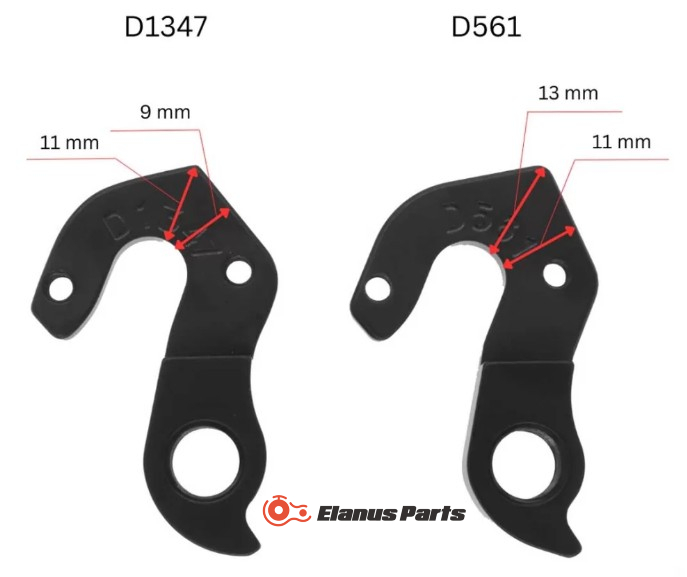
Examples of Different Derailleur Hanger Designs
These derailleur hangers may look similar at first glance but are completely incompatible.
Need Help Identifying Your Derailleur Hanger?
If you're unsure which hanger fits your bike, send:
- Photos of the hanger from both sides
- Photos of the frame dropout
- Bike brand and model
- Approximate model year
The more information you provide, the easier it is to find the correct replacement and get your bike shifting perfectly again.
Quick Summary for Riders
If you only remember one thing from this guide, remember this:
The most accurate way to identify a derailleur hanger is to remove it from the frame and provide clear photos of both sides together with photos of the frame dropout area.
That simple step solves the vast majority of derailleur hanger identification requests and helps avoid ordering the wrong replacement.
Need help identifying your derailleur hanger? Send us photos here.
Information Needed to Identify a Derailleur Hanger
- Bike brand
- Bike model
- Model year
- Rear axle type
- Photos of both hanger sides
- Photos of the frame dropout
Can You Identify a Derailleur Hanger from a Photo?
Yes. In most cases a derailleur hanger can be identified from clear photos of both sides and the frame dropout area. This is the method used by most professional bicycle parts specialists.
Comments (0)